Stair Tread Tile at Laterem
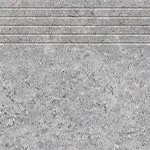
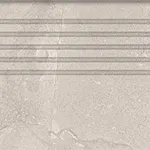
A step tile is a tread: a porcelain piece made with a finished front edge, so a staircase or a change of level ends cleanly instead of in a raw cut. Laterem lists 23 of them. Every one is porcelain, every one is rectified, every one is matte, and every one is 8 mm thick — so the tread height stays consistent whichever look you pick. They are grouped by the floor they match, which is the point of the category.
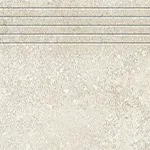
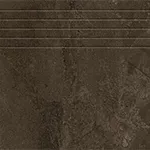
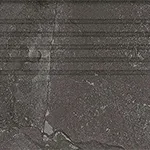
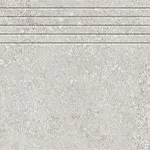
Aulla Graphite and Aulla Gray give a concrete look. Grand Cave Brown, Graphite, Ivory and White, and Zimba Beige, Gray, Light Gray and Black, give stone looks. Travertino Beige reads as travertine. Arona Beige and Arona Gray are sold by the box as matte treads. All of them come in 12x24, and most also come in 12x48.
Bullnose or Stair Tread — Which Piece You Actually Need
These two get confused constantly, and they are not interchangeable.
A bullnose is a trim piece: a narrow strip with one rounded edge, used to finish the exposed edge of a tiled surface. A stair tread is a full-size tile with a finished, profiled front edge, made to be the walking surface of the step itself. On a staircase you want the tread. A bullnose is what you reach for at an open side where the tread returns, or to cap a riser.
The practical test: if the piece will be stood on, it is a tread. If it finishes an edge someone looks at rather than walks on, it is trim. A finished flight normally needs three or four things — the tread, a riser, a matching field tile, and trim where an edge is exposed. Not every collection is made in every piece, so confirm what exists in the range you have chosen before you commit to it.
Slip Ratings on Stair Tread Tile
Slip resistance is the specification that matters most on a stair, and in this range it is not uniform. The tiles here carry R ratings under the German DIN ramp test, which sorts surfaces from R9 (lowest) to R13 (highest). What is actually on the shelf:
- R10 B — every Zimba tread: Beige, Gray, Light Gray and Black, in both lengths. The B suffix comes from the barefoot wet-ramp test, which is the relevant one around water.
- R10 A — Grand Cave Brown, Graphite and Ivory.
- R9 — Travertino Beige, in both lengths. This is the lowest rating in the range and the one to think hardest about on an exterior or wet stair.
- Not stated — Arona Beige and Gray, both Aulla treads, and Grand Cave White. Where no figure is published we would rather say so than estimate one. Ask us and we will get the number from the manufacturer before you order.
Nothing in this range is rated R11 or R12. If a specification calls for R11 or above — some commercial stairs and most commercial wet areas do — tell us and we will source to it rather than sell you something that does not meet it.
Outdoor Stair Treads
Two specifications decide whether a tread survives outside: frost resistance and slip rating. On the frost side this range is strong — every tread with a published figure is frost resistant, which is what lets a porcelain stair run from an interior hall out onto an exterior step without changing product.
Slip is where the judgement sits. For an exterior flight that will be wet, the R10 B Zimba treads are the most defensible choice in the range, since the B classification comes from the barefoot wet test. Travertino at R9 is better kept dry and interior. Grand Cave White has no published frost or slip figure at all, so we would not specify it outdoors without checking first.
Worth knowing: the Zimba treads are unglazed coloured-body porcelain, so their wear is measured as volume loss (under 110 mm³) rather than on the PEI scale, which only applies to glazed tile. A chip in an unglazed coloured body shows the same colour underneath — a real advantage on a stair nosing, which is the first thing in any room to take a knock.
How to Measure for Stair Tread Tile
Measure the width of the stair at the widest point, not at the narrowest, and not from an old carpet edge. Then choose the tread length that covers it in one piece: 12x48 spans up to four feet, and 12x24 up to two. Matching tread length to stair width is the single decision that most affects how the finished flight looks, because a joint landing mid-step is visible from the bottom of the stairs for the life of the installation.
Count the treads and the risers separately — a flight has one more riser than it has treads if it finishes at a landing. Measure the tread depth front to back, and check it against the tile depth: at 12 inches deep these treads suit a standard residential run, but a deeper commercial stair may need the tread set forward with a field tile behind it. Add the usual allowance for cuts and breakage on top, and order the whole flight in one go so every piece comes from the same batch — shade varies between batches, and the Grand Cave treads are V3, which means noticeable variation from tile to tile by design.
Installing Over Existing Stairs
Tiling over an existing staircase is common, and the questions are always the same three. Is the substrate sound and rigid enough — because a stair that flexes will crack tile and grout regardless of how well it is laid. Does the added height of tile plus adhesive change the riser heights enough to matter, since building codes limit how much riser heights may vary within a single flight. And does the nosing project correctly once the tread is bedded.
At 8 mm these treads are on the thinner side for porcelain, which helps when build-up is a concern. That is a fact about the tile, not a verdict on your staircase: whether a specific flight can take tile is a question for the installer who can stand on it. We are happy to talk it through, and the showroom has the full tread profiles on display if you want to see how the edge sits before you decide.
Where to Use Stair Tread Tile
Interior stairs between floors, a single step down into a sunken room, a raised threshold, a pool or patio edge, and the nosing on a landing all take the same product. Every tread here is rated for residential wall and floor use and for commercial floors, so a specification that covers a house also covers a shop or an office stair.
In practice, pick the floor first and the tread second: running porcelain up the stair with the matching tread keeps the level change quiet. For a stair beside a plank floor see wood look, for neutral shades browse gray and silver, and for the stone looks that most of this range belongs to, see stone look tile. Samples are $1, and the whole range is on display at our Colts Neck showroom.