1 to 24 of 84 total
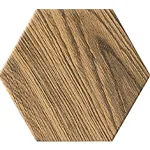
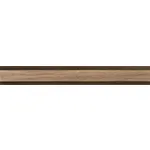
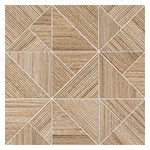
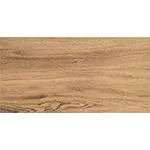
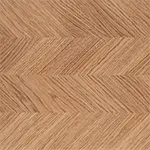
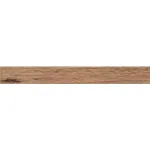
Wood look tile reproduces the grain, tone and plank proportions of timber in porcelain and ceramic. The range here runs from long planks to square and hexagon formats, in colors spanning almond, cream, light beige, natural, gold, brown and graphite. Alami Brown is a 8x48 plank; Fargo Beige and Fargo Gold are 6x24; Willow runs in 6x24 planks with matching 3x24 baseboards. Beyond straight planks, Elle Wood and Onice Bianco Wood bring the grain into mosaic sheets, Burano Wood into a 4x5 hexagon, and Velvetia and Venablanca into larger 12x24 and 13x36 wall tiles. Nearly everything is matte, with Venablanca offering a mixed matte-and-glossy face.
Start with plank proportion. Long, narrow formats like 8x48 read closest to real hardwood; shorter 6x24 planks suit smaller rooms where a long plank would need too much cutting. Check the production type: rectified pieces take a tight grout joint and give the most convincing continuous floor, while pressed non-rectified tiles need a slightly wider joint. Choose a grout close to the mid-tone of the tile so the joints recede and the surface reads as boards rather than tile. Matte and structured surfaces are the norm in this range, which is what you want underfoot — they hold grip better than a polished face and disguise traffic.
The advantage over real wood is water. These are porcelain and ceramic, so they can go where timber cannot: bathroom floors, shower walls, laundry rooms, kitchens and entryways, as well as living areas and commercial floors where hardwood would dent or mark. Matching baseboard pieces let a floor turn up the wall cleanly. On walls, the structured 12x24 and 13x36 formats and the mosaic sheets work as feature panels and backsplashes. Order a $1 sample before committing — wood tones shift noticeably between daylight and warm indoor lighting.