
1 to 24 of 165 total



$29.99 / per Piece
In Stock — Ready to ship


$30.38 / per Piece
In Stock — Ready to ship


$142.21 / per Box
In Stock — Ready to ship


$54.08 / per Piece
In Stock — Ready to ship
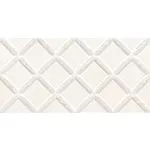
3D Wall Tile Collection brings depth, texture, and architectural character to interiors through sculptural surfaces and dimensional patterns. Designed to interact with light and shadow, these tiles create dynamic walls that add visual interest and a distinctive contemporary feel.
Discover 3D wall tiles designed to bring dimension, movement, and sophisticated texture to every space.
$29.99 / per Piece
$30.38 / per Piece
$142.21 / per Box
$54.08 / per Piece
Structure wall tile is molded with relief on the face, so the tile itself makes the shadow. Nothing is printed, the depth is physical. The 166 products here come in white body ceramic, red body ceramic and glazed porcelain, as rectangular, square and L-shaped pieces. Fluting is the most common language: Cadence Fluted Ivory 13x36 in a satin stone look, Elle in Navy, White and Wood at 13x36 semi-matte, and Aurora in Blue, Green, Mint, Navy and White at 12x36 glossy. Shallower relief comes as Coma Navy and Coma White in 8x8 matte, Ezmo Black 3x12 glossy subway, and All in white in 12x24 and 3x9, while Burano White Lines and White Stripes carry a finer ribbed face.
Relief only shows if light crosses it. Work out where the window or the lamp sits before you settle on a depth, because a wall lit from straight ahead flattens even a deep flute, while a grazing light turns a shallow one into strong stripes. Gloss amplifies that effect and matte or satin keeps it soft. Direction counts too: vertical fluting stretches a wall upward, horizontal widens it, and L-shaped pieces carry the relief around a corner without a trim. Check the production type, since rectified pieces take a tight joint that hides the grid, while pressed and non-rectified stock needs a wider joint that stays visible.
Feature walls take most of it: behind a bed, a vanity, a bar, a reception desk or a fireplace. In a bathroom, relief on the dry walls with a flat tile in the wet zone keeps cleaning simple, since a fluted face collects soap inside a shower. Half-height wainscot with a plain field above is a cheaper way to get the same effect. Because the depth is real, these tiles want a straight, flat substrate. Find the flat companion in wall tiles, set a panel against mosaics, or narrow the search by shade in black, green tile or blue tile. For the ribbed and grooved profiles on their own, see fluted tile.