Vintage Porcelain and Ceramic Tile for Floors and Walls
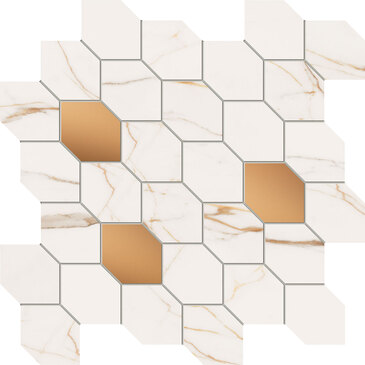
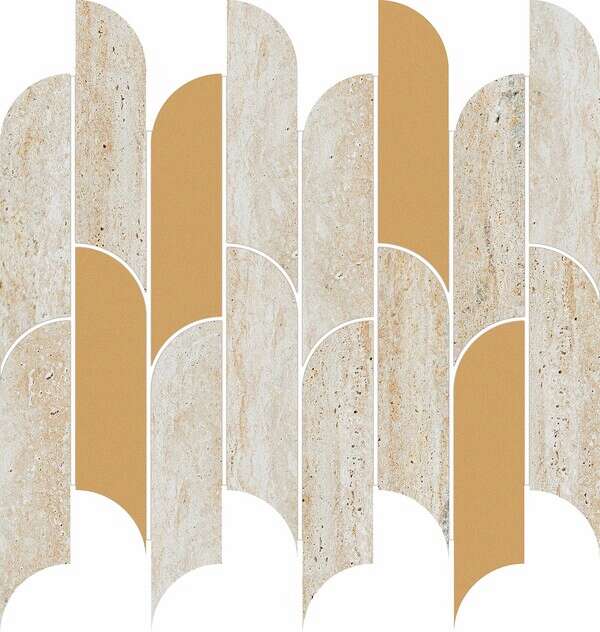
Vintage here means old catalog shapes reissued in pressed porcelain and glazed ceramic. The pattern filter runs to hexagon and elongated hexagon, chevron, fish scale, basketweave, listello and small square mosaics, and the color list leans bone, ivory, almond, caramel, burgundy, perla and graphite. Rochelle Flowers White 6x9 sets a floral print on a satin picket face; Sophi Oro Black 12x24 pairs glossy ceramic with gold linework; Grigia Gray 2x24 is a matte listello with a gold accent band. Blackwall Black 12x10 combines a lappato surface with polished copper, and Dorado Stone White 12x12 keeps a gloss mosaic face. Reading black and white tile together is what produces a checkerboard floor.
Choosing Vintage Tile
Start with format. Small mosaic sheets around 8x9 to 12x12 hold more grout line per square foot, which is what gives a vintage floor its drawn, gridded look; 12x24 pieces such as Onix Pearl read calmer and cover ground faster. Glossy and satin faces bounce light and suit walls, while matte and semi-matte take wear better underfoot. Rectified edges let you close the joint to about 1/16 inch; pressed edges need a wider joint, closer to 1/8 inch. Check shade variation across boxes before setting, and decide early whether grout should disappear into the tile or draw the pattern.
Where to Use Vintage Tile
Product naming on this page tells you where each piece belongs: wall tile and wall decor for backsplashes and vanity walls, floor and wall mosaics for shower pans and powder room floors, and step treads such as Grand Cave White 12x24 for stairs and landings. Mild Garden White strips and Caramell Brown decor pieces work as borders above a subway field. Bathrooms take the most vintage tile, followed by kitchens, entries and laundry rooms. Browse the wider porcelain tile range for floors, or mosaics when the pattern matters more than the field.
Related styles: art deco tile, classic tile, mid century modern tile and farmhouse tile.