
Rustic Porcelain and Ceramic Tile for Floors and Walls
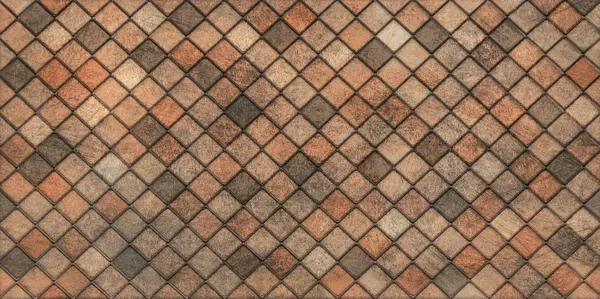
Rustic tile trades even color for surface interest. Most of this range is glazed porcelain and white body ceramic, alongside a block of unglazed porcelain and a color-body group whose pigment runs through the tile rather than sitting on top. Matte dominates the surface filter by a wide margin, with glossy, satin, lappato and semi-matte behind it. Grand Cave White and Grand Cave Graphite carry a stone-look structure across 12x24 and 12x48 formats, and Aulla Gray and Aulla Graphite repeat it in step pieces. Elle Wood 12x12 and Onice Bianco Wood 11x12 bring grain into mosaic sheets, while Ramina Mix Brown 12x24 works as a patterned wall face.
Choosing Rustic Tile
Format drives how rustic a floor reads. Long 12x48 planks show more of a single grain run but demand a flat substrate; 12x24 is more forgiving and quicker to set. Matte hides scuffs and dust, which is the practical reason it outnumbers every other finish here. Polished and lappato faces belong on walls or in low-traffic rooms. Rectified tile lets joints close to about 1/16 inch and keeps a plank floor looking continuous; pressed tile wants nearer 1/8 inch. Lay several boxes out dry first. Shade variation is the point of this style, but it should be distributed rather than clustered.
Where to Use Rustic Tile
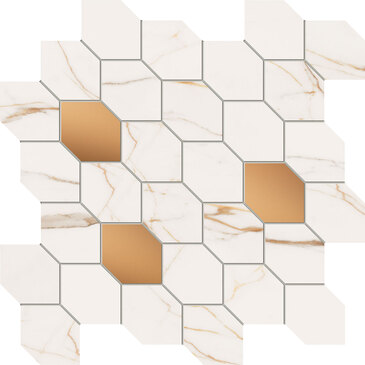
Labels on this page point straight at the applications: wall tile, floor and wall mosaics, step tile and step treads. That covers kitchen floors, mudrooms, bathroom walls and shower niches, plus stairs and landings where the Aulla and Grand Cave treads pair with matching field tile. Wood-look pieces suit hallways and open living areas that run into a kitchen. Chevron and hexagon layouts earn their keep in a powder room, where a small floor can carry a stronger pattern. For wider options, see wood look tile and brown tile.
Nearby styles: farmhouse tile, natural look tile, industrial tile and cottage tile.