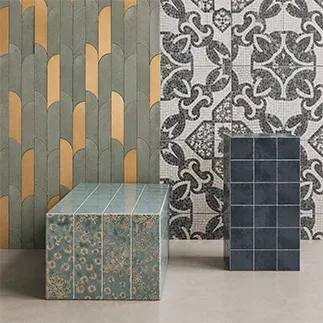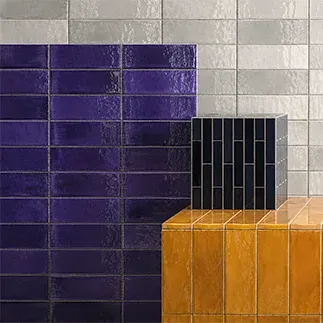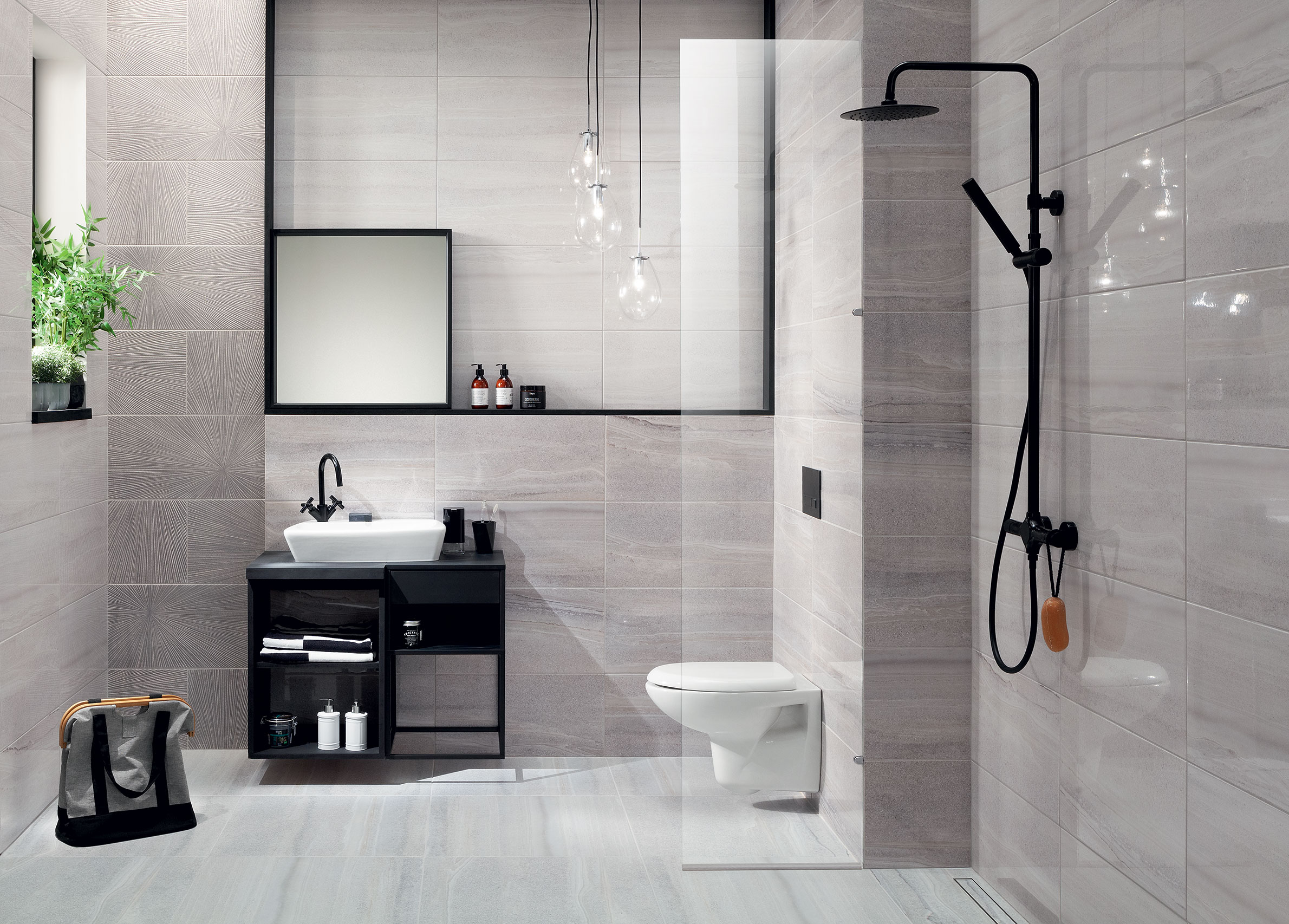
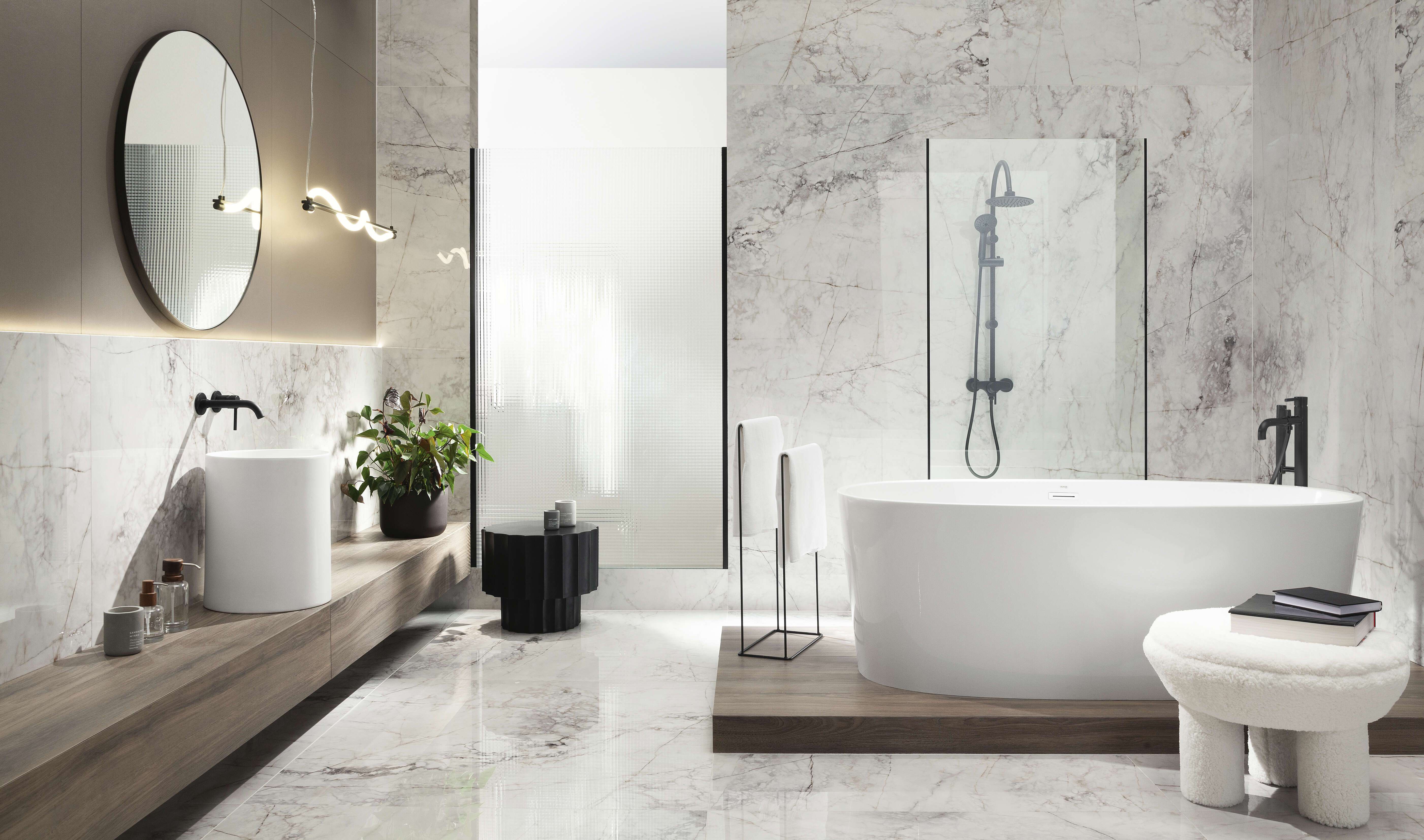
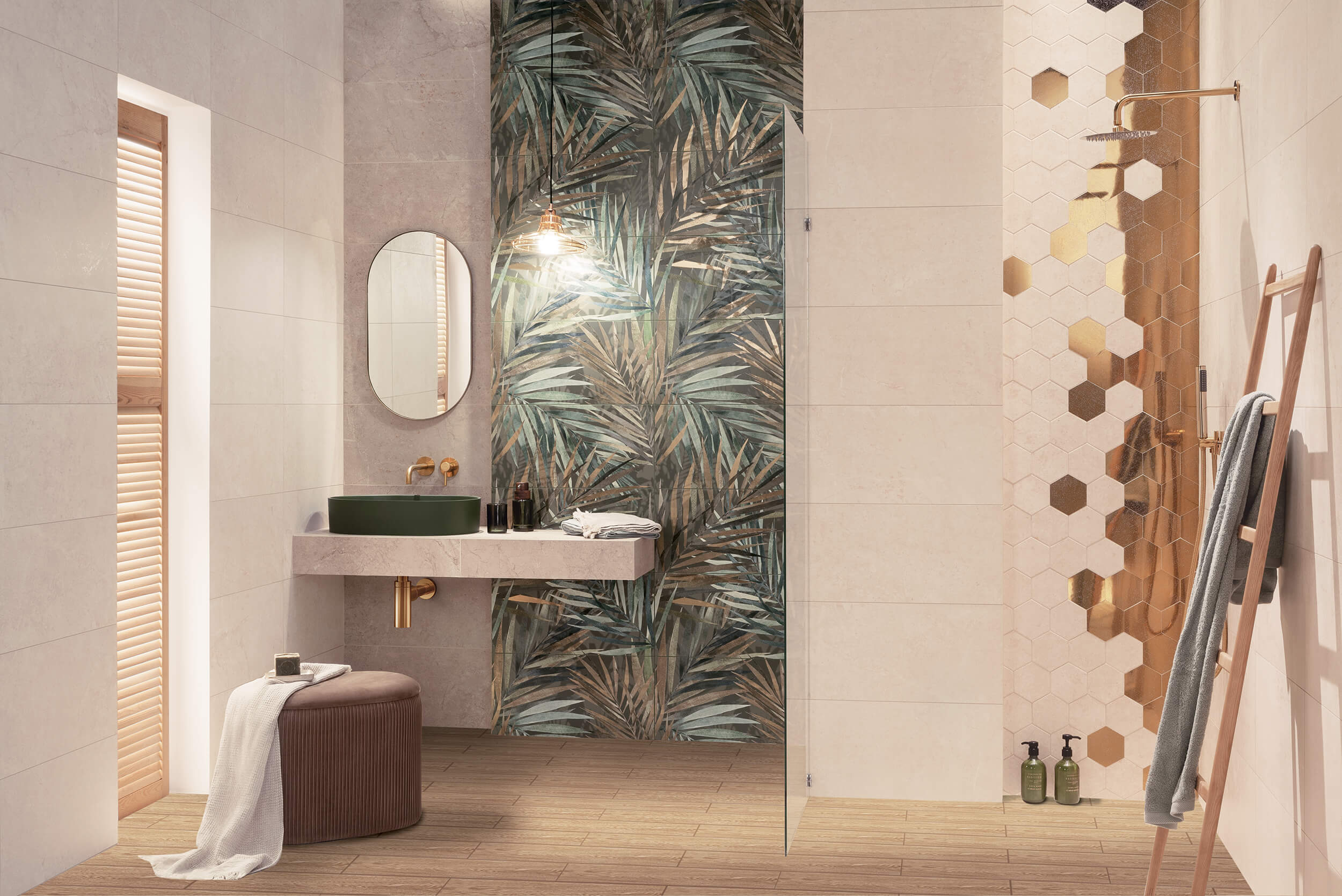
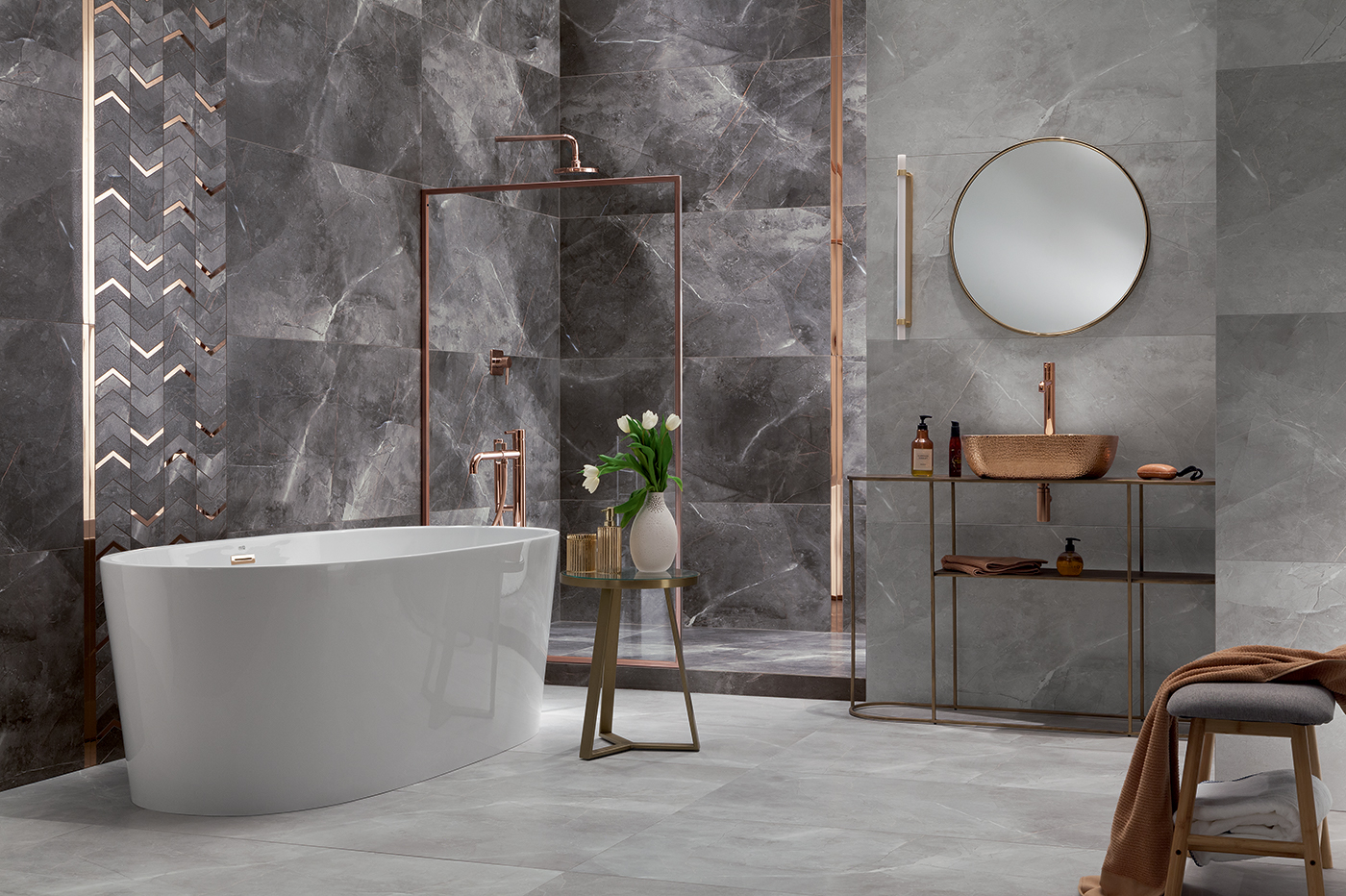
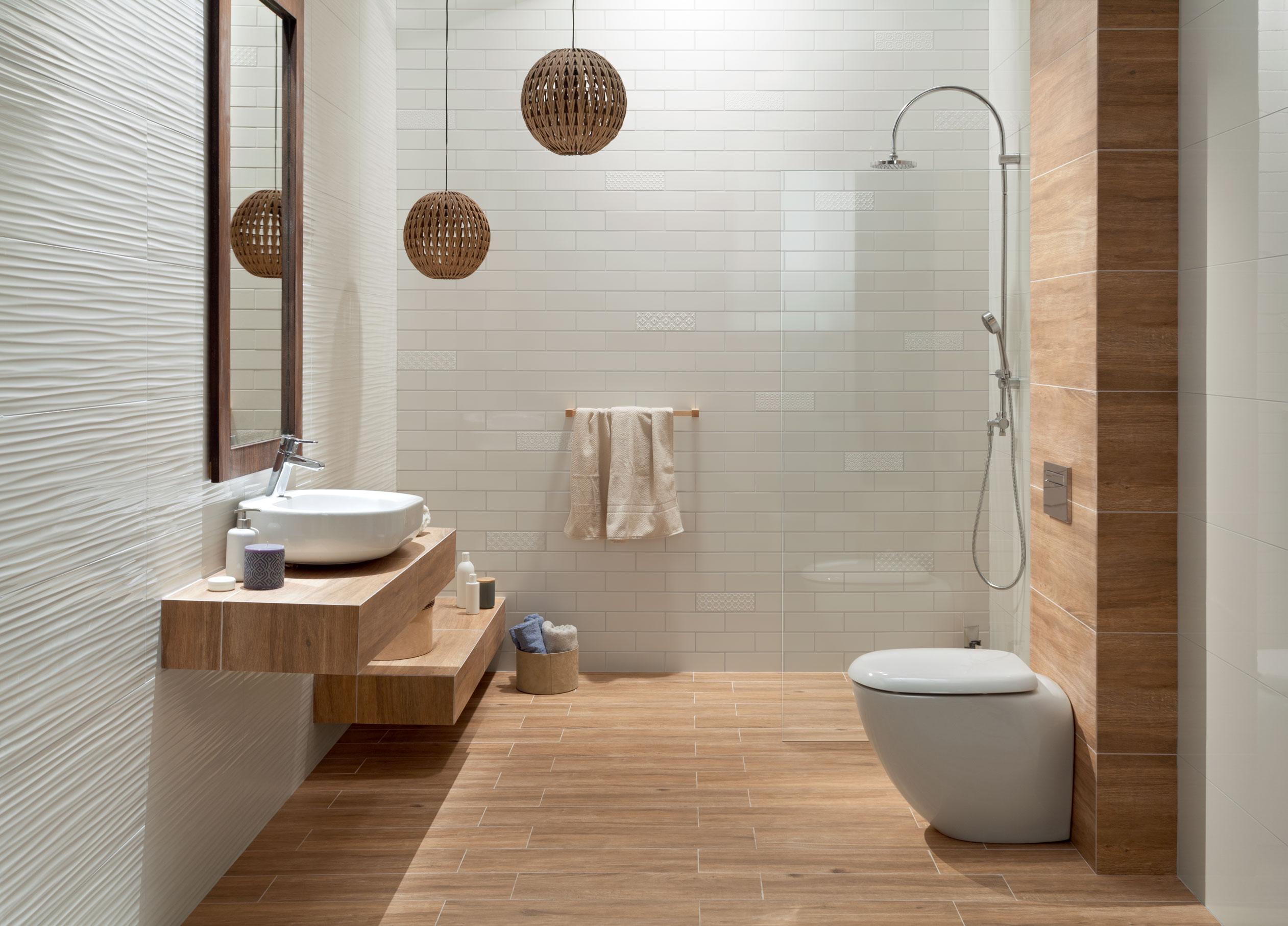
Shape decides how a tiled surface reads before color does. A stacked grid is quiet; the same tile in a herringbone is not. This silo groups the range by form rather than by color or material, so you can start from the layout you have in mind and work back to the tile.
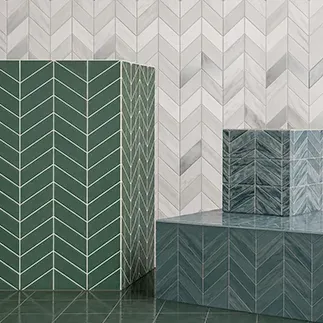
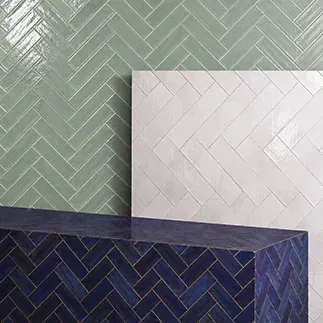
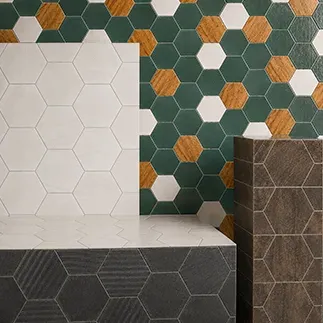
Subway tile is the default rectangle — 3x9 and 3x12 ceramic in matte, glossy and structured faces, laid in a running bond, stacked or on the diagonal. Hexagon tile runs from 4x5 accent pieces to 11x12 sheets and 12x12 porcelain, and tiles a floor with no straight grout line across it. Herringbone tile sets rectangles at a right angle to each other for a woven, directional floor, while chevron tile mitres the ends so the points meet in a continuous V.
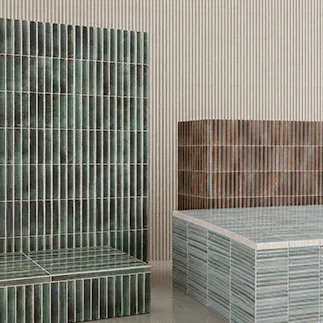
Fluted tile carries a ribbed relief across the face — Groove in 3x12, Incurve in 6x12, and larger 12x24 formats — so a plain wall picks up shadow as the light moves. Mosaic tile arrives as mesh-mounted sheets in hexagon, square, chevron and strip layouts, which is what you want on a shower floor or around a curve where a large tile cannot follow the slope.
Two practical rules. Small formats and mosaics mean more grout joints, which is a drawback on a kitchen wall and an advantage underfoot in a wet area where you want grip. And directional patterns — herringbone, chevron, any plank laid at an angle — waste more material in cuts, so add 15% to your order rather than the usual 10%. Order a $1 sample of anything you are unsure about, or see the full boards at the Colts Neck NJ showroom.